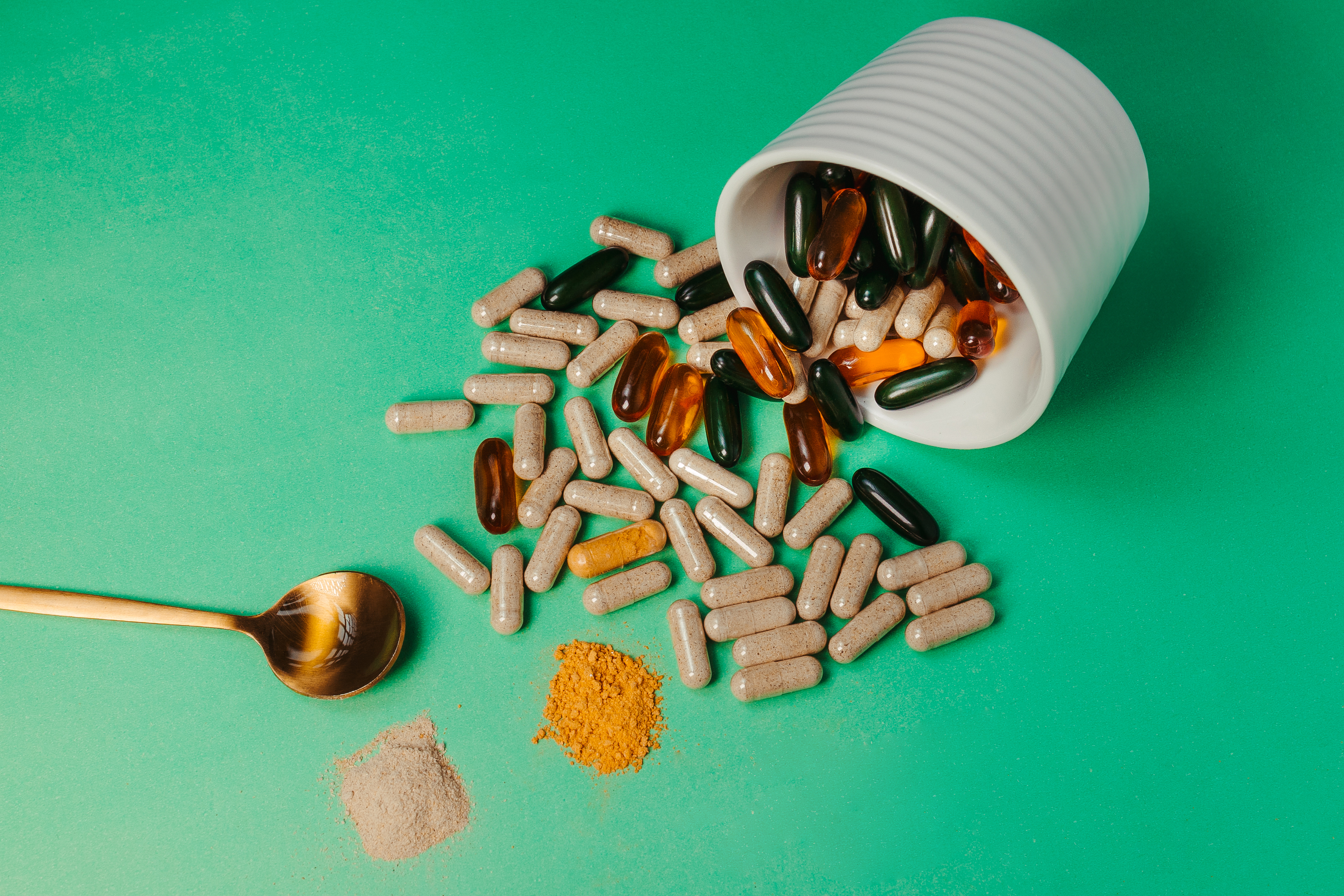
Seventy percent of lactating women used one or more dietary supplements between 1999 and 2014. Despite their widespread use, only a small portion of supplements have been proven to be safe and effective, since this is not a requirement before the product hits the shelves. Many products provide uncertain or limited benefit, a gap that becomes particularly important for breastfeeding mothers who may be more vulnerable to safety concerns. A mixed-method study on women’s opinions showed that 75% of women think natural products are safer than drugs during breastfeeding, and 25.8% think natural products are more effective than drugs. Neither of these are blanket truths, and both assumptions can be wrong.
One of the major challenges with supplements is variability in product quality. Research evaluating products such as prenatal vitamins has demonstrated that labeled ingredient amounts do not always match measured content. For example, a study of melatonin products found gummies sometimes contained more than 3 times the dose listed, and one even had no melatonin at all--just CBD! The FDA does not have the authority to approve dietary supplements for safety and effectiveness, or to approve their labeling, before the supplements are sold to the public. Under the FD&C Act, it is the responsibility of dietary supplement companies to ensure their products meet the safety standards for dietary supplements and are not otherwise in violation of the law. That being said, supplements can have questionable safety and efficacy since they do not go through clinical trials. Dietary supplements are not required to prove they work before being sold, yet history shows they can absolutely cause harm. Yes, there are responsible companies committed to quality. But it only takes one bad actor, one contaminated batch, or one adulterated ingredient to put consumers at risk. And from the outside, the labels look the same. To informed consumers, purchasing a supplement can feel less like healthcare and more like Russian Roulette.
Supplement manufacturers do operate under Good Manufacturing Practices (cGMPs), which is a set of regulations that establish the minimum requirements for the methods, facilities or controls used in the manufacture, processing, packaging, or holding of a drug product. However, despite these regulations, production and quality is not always the same. While GMP is “required,” the FDA is not proactively inspecting or asking whether manufacturers meet these standards. Even drug manufacturers regularly get in trouble for failing to meet GMP standards, and their procedures are likely better than supplement manufacturers.
Ways to Avert Risk
Several third-party organizations evaluate supplements for identity, purity, and contamination. While certification does not establish if the supplement works, it can provide additional reassurance regarding product quality. Organizations such as United States Pharmacopeia (USP), NSF International, and ConsumerLab offer quality testing and allow products that pass these tests to display a seal of quality assurance. Unfortunately, less-than-upstanding manufacturers who don’t get these certifications use similar-looking “seals” to trick you into thinking they have met these standards. Certification should be verified through the USP verified products database rather than relying solely on product labeling.
FDA Recalls
A recent recall involving moringa capsules provides a useful example of how the system works. Per the FDA, supplements cannot claim to treat, cure, or prevent any disease. To get around this, manufacturers often use adjectives such as promote, maintain, support, or regulate. For example, moringa products are commonly claimed to support healthy joints and energy levels as well as a good night's sleep. They also say moringa “supports” the production of breast milk. Several lot numbers of the Rosabella brand were recalled by the FDA for salmonella contamination after several illnesses and hospitalizations were reported. This highlights the fact that safety oversight is reactive, not proactive. The FDA intervenes after supplement problems are identified in real people, and then the product gets pulled from the market. Customers who have the product are supposed to 1) find the recall on their own and 2) dispose of the product (usually with no refund).
Grace Onaiwu, Pharm.D. Student
Kaytlin Krutsch, PhD, PharmD, MBA, BCPS
References:
Jun, Shinyoung MPH; Gahche, Jaime J. PhD, MPH; Potischman, Nancy PhD; Dwyer, Johanna T. DSc, RD; Guenther, Patricia M. PhD, RD; Sauder, Katherine A. PhD; Bailey, Regan L. PhD, MPH, RD. Dietary Supplement Use and Its Micronutrient Contribution During Pregnancy and Lactation in the United States. Obstetrics & Gynecology 135(3):p 623-633, March 2020. | DOI: 10.1097/AOG.0000000000003657
Colaceci S, Giusti A, De Angelis A, et al. Medications, “Natural” Products, and Pharmacovigilance during Breastfeeding: A Mixed-Methods Study on Women’s Opinions: A Mixed-Methods Study on Women’s Opinions. Journal of Human Lactation. 2016;32(2):324-332. doi:10.1177/0890334415619746
U.S. Government Accountability Office. Prenatal Supplements: Amounts of Some Key Nutrients Differed from Product Labels. GAO-24-106689. Published December 12, 2023. Accessed March 23, 2026. https://www.gao.gov/products/gao-24-106689
Cohen PA, Avula B, Wang Y, Katragunta K, Khan I. Quantity of Melatonin and CBD in Melatonin Gummies Sold in the US. JAMA. 2023;329(16):1401–1402. doi:10.1001/jama.2023.2296
U.S. Food and Drug Administration. FDA 101: Dietary Supplements. Published November 2022. Accessed March 23, 2026. https://www.fda.gov/consumers/consumer-updates/fda-101-dietary-supplements
U.S. Food and Drug Administration. Facts About Current Good Manufacturing Practice (CGMP). Accessed March 23, 2026. https://www.fda.gov/drugs/pharmaceutical-quality-resources/facts-about-current-good-manufacturing-practice-cgmp
U.S. Food and Drug Administration. Outbreak Investigation of Extensively Drug-Resistant Salmonella: Moringa Powder (February 2026). Published February 19, 2026. Accessed March 23, 2026. https://www.fda.gov/food/outbreaks-foodborne-illness/outbreak-investigation-extensively-drug-resistant-salmonella-moringa-powder-february-2026